
How to read a football betting slip before confirming your bet
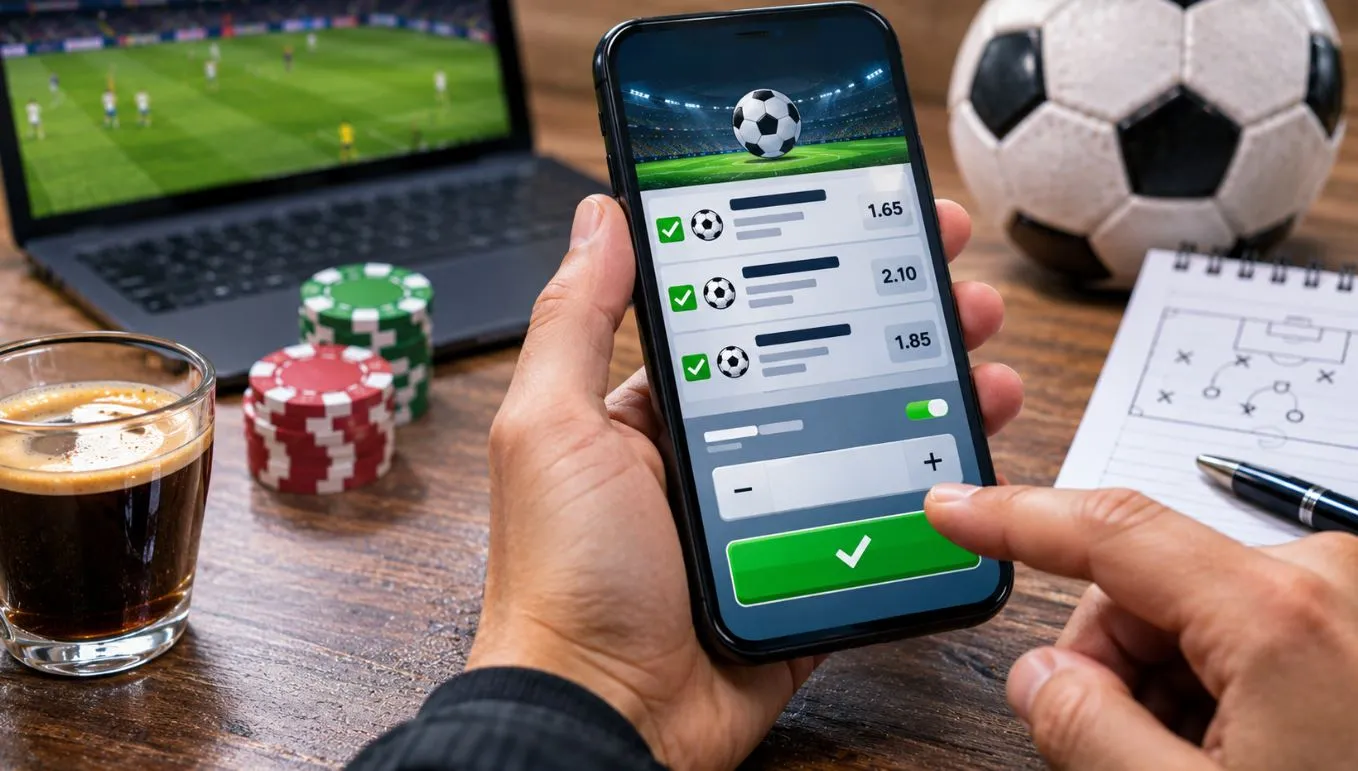
The moment between picking a selection and pressing confirm is the only real checkpoint in the whole betting process. Once the slip is accepted, arguing about what you meant to bet becomes nearly impossible, and most costly mistakes — wrong market, misplaced stake, misunderstood condition — happen exactly in those few seconds of inattention. A betting slip rewards a slow read. Learn what each line on it actually says, and you stop gambling with your own carelessness before you ever gamble with your money.
What a slip is made of
A football betting slip, whether digital or printed at a retail counter, follows a standard anatomy. Every accepted bet carries the same core fields, and knowing them turns a wall of small print into a two-second scan:
- Event details. The teams, the competition and the kickoff date with time, so you can confirm you are betting on the right match, not a similarly named fixture from a different league.
- Market. What exactly you predicted — match winner, both teams to score, over or under goals, a handicap line or a specific player outcome.
- Selection. The precise outcome within that market, written out in full rather than abbreviated.
- Odds. The price at which your selection is accepted, which locks in your potential return.
- Stake. The amount you are risking on this bet or on the combined slip.
- Potential return. The payout if everything on the slip wins, calculated as stake multiplied by the odds.
Reading a slip is essentially a checklist through those six fields, and experienced bettors run through it in the same order every time — not because the order is sacred, but because a fixed routine catches errors that an occasional glance misses.
The market line: where most misunderstandings live
The market and the selection together define your entire agreement with the bookmaker, and this is the line that deserves the longest look. “Over 2.5” means three or more goals in the match, a definition that trips up newcomers who expect two and a half to be a threshold inclusive of two. A “both teams to score — yes” ticket wins even if the score is 5–5 or 1–1, but loses on any clean sheet for either side. A “draw no bet” slip refunds your money rather than paying out if the game ends level, which is a completely different settlement from a draw prediction.
Conditions attached to markets matter just as much. Many player markets require the named footballer to start the match, not merely appear as a substitute; some first-half markets void if the break is not reached. A slip is a contract, and the market line is where the contract’s fine print lives — anything you cannot explain in one sentence is a bet you are not ready to place.
Odds, stake and potential return: the arithmetic to check
Once the selection is right, the numbers deserve their own pass. Odds fix your potential return at the moment of acceptance, and the slip calculates it for you: multiply stake by decimal odds and you get the full payout, stake included. A £25 single at 2.40 shows a potential return of £60.00, of which £35.00 is profit. On accumulators, the slip multiplies every leg’s odds together, which is why small lines inflate so dramatically — and why a single wrong leg in an eleven-fold almost always sends the whole amount back to zero.
This is also where stakes get misread. On complex bets the stake field may show the amount per line rather than the total, particularly on system bets: a trixie entered with £2 per combination actually costs £8, because the structure contains four combinations. A quick comparison between what you intended to spend and what the total stake line says prevents the most common form of accidental overspending:
| Slip field | What to verify | Typical mistake |
|---|---|---|
| Event | Date, kickoff time, correct fixture | Right teams, wrong round or league |
| Market and selection | Full wording, not an abbreviation | Over/under threshold misunderstood |
| Odds | Price matches what you accepted | Slippage accepted without noticing |
| Stake | Total cost, not per-line amount | System bet cost misread |
| Potential return | Payout matches your expectation | Bonus odds assumed as cash |
| Extra conditions | Cash-out, early payout, each-way flags | Promotional terms overlooked |
Running through these six checks takes less than half a minute, yet it intercepts the overwhelming majority of settlement disputes that end up in support queues. The potential return line deserves one extra second of arithmetic in your head, because a payout that looks roughly right while hiding a decimal-point error is the most expensive mistake a slip can carry.
Special flags and conditions worth spotting
Modern slips carry more than market and price. Several flags change how a bet settles, and each one deserves a conscious decision rather than an accidental tick:
- Cash-out enabled. Allows closing the bet early for a partial return; usually a good default, but the cash-out value can drift badly on volatile matches.
- Early payout or insurance promotions. These modify settlement — for instance, paying a bet as a winner once a team leads by two goals — and their terms override the standard rules.
- Free bet indicator. Shows the stake came from a promotional token; winnings typically arrive without the stake included in the payout.
- Each-way or split stakes. Common in racing and some novelty markets, effectively splitting your stake into two halves with different conditions.
- Odds boost applied. A boosted price may come with a maximum payout cap or a single-use-per-day restriction.
These flags are harmless when intentional and expensive when accidental, which is why they belong in the pre-confirmation scan alongside the numbers.
A short routine before you press confirm
The difference between a careful bettor and an impulsive one is rarely knowledge; it is a habit applied under time pressure. Before confirming any slip, a compact sequence covers everything that matters:
- Match the fixture — correct teams, competition and kickoff time.
- Read the market in full and translate it into your own words: what exactly has to happen for this bet to win?
- Verify the odds match the price you decided to take, not a nearby number.
- Check the total stake against your budget for the day, not just your intention.
- Confirm the potential return and glance at any promotion or flag attached.
- Place the bet — or delete it without guilt, which is also a valid outcome of a proper read.
That final point is the one beginners resist most. A slip read carefully and rejected is not a wasted effort; it is the cheapest possible lesson in the market you almost misread. Over a season, the discipline of deleting half-understood bets does more for your balance than any amount of statistics.
Why the slip deserves the same attention as the match itself
Bettors spend hours analysing form and minutes checking slips, and the imbalance is backwards: analysis improves your average result by a fraction, while a misread slip destroys a bet completely. The fields are standard, the checks take thirty seconds, and the payoff is a settlement process with no surprises — you already know exactly what has to happen and what the win is worth before the first whistle. A bet placed with that certainty is worth more than its odds suggest, because it is one of the few wagers whose outcome you fully understood from the very start.