
Fixed match scams in Kenya: warning signs and how to avoid them
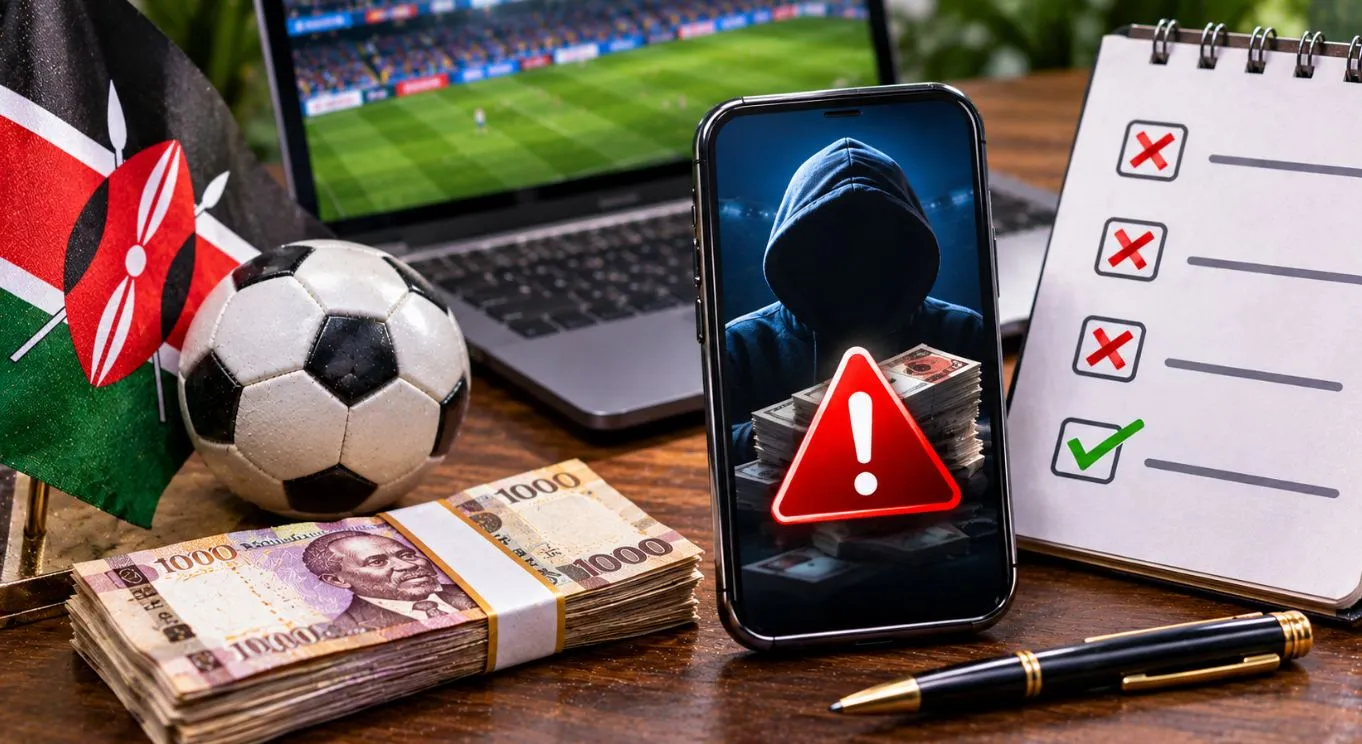
The message arrives with confidence that leaves no room for doubt: a “reliable source” inside a club has confirmed the exact score, VIP slots are limited, and payment must be sent today. In Kenya’s huge football betting community, this pitch lands on thousands of phones every week, and it costs real money every time it works. Fixed match scams are not clever because their methods are sophisticated — they are clever because they exploit hope, urgency and the simple fact that football really does produce occasional shocking results. Understanding how the scheme works, from the inside out, is the most reliable protection available.
Why the “guaranteed match” story is almost always fake
Real match-fixing is a serious crime, heavily policed by leagues, federations and betting operators themselves, and it carries long-term bans for everyone involved. Crucially, the economics make retail selling nonsense: a genuinely fixed match is worth millions to organised syndicates, who monetise it quietly through carefully spread bets. Anyone holding true inside information has every incentive to use it silently, not to sell it for a few thousand shillings to hundreds of strangers whose combined betting would distort the odds and trigger fraud monitoring.
The scams that circulate in Kenya are rarely about real fixing at all. They are confidence tricks built on information the seller cannot possibly have, sold with promises no honest analyst would make. The football itself — the match, the league, the result — is simply a prop in a fraud that would work just as well with any other product at its centre.
How the scam typically unfolds
The mechanics repeat with remarkable consistency across cases, and recognising the pattern is the fastest defence. The typical sequence runs like this:
- Contact through social media or messaging apps. Telegram groups, WhatsApp broadcasts, Facebook pages and comment sections are the main recruiting channels, often using the names or branding of real tipster communities.
- A claim of insider access. The seller presents themselves as connected to club officials, players, referees or Asian betting syndicates, with “confirmed” scores or results.
- Limited slots and payment pressure. A small number of VIP positions, a deadline before kickoff and a payment method that is difficult to reverse — commonly mobile money transfers to a personal number.
- The “proof” stage. Screenshots of past wins, sometimes genuine slips recycled from other people’s bets, sometimes edited images presented as evidence of reliable fixed matches.
- The outcome. Either the prediction fails and the seller blames bad luck or a “bait” match, or the buyer is strung along with the promise of the next “real” fix after paying again.
Some variations add a second layer: after an initial payment, the buyer is told their slot was not confirmed, or that the fix requires a further payment for “full information”. Each stage is designed to extract one more transfer before the buyer accepts the loss.
Warning signs that expose a fake fixed match seller
The red flags are consistent, and they cluster around three themes: impossible claims, payment pressure and absence of accountability. A seller showing any of the following should be treated as a fraud by default:
- Guaranteed scores or outcomes. Football is structurally unpredictable; anyone claiming certainty is either lying or selling a guess dressed as insider information.
- Requests for payment to personal numbers. Mobile money transfers to individuals, rather than payments to a registered business, leave no consumer protection path.
- Urgency and artificial scarcity. “Only three slots left”, “payment closes in one hour” — legitimate services do not impose countdowns.
- Anonymous identities. No verifiable name, registration or physical presence, often combined with borrowed photos and cloned branding from real tipsters.
- Screenshots as the only evidence. Images prove nothing, as edited slips and recycled wins are trivial to produce and impossible to verify from a picture alone.
- Encouragement to stake large amounts. If the match is truly fixed, a modest stake would suffice; pressure towards big stakes reveals the seller’s real objective.
The presence of even one of these signs is reason to walk away; several together amount to certainty. What makes them effective, though, is that they arrive wrapped in the vocabulary of insider betting culture — “connects”, “safe matches”, “VIP analysis” — which gives the fraud an air of legitimacy it has done nothing to earn.
What genuine betting analysis looks like instead
The contrast with honest tipping is stark, and the comparison is the sharpest test of any seller’s honesty. Legitimate tipsters operate transparently:
| Aspect | Fixed match seller | Honest tipster |
|---|---|---|
| Claims | Guaranteed results, insider sources | Probabilities, reasoned predictions |
| Evidence | Edited or recycled screenshots | Verifiable long-term records, including losses |
| Payment | Personal numbers, irreversible transfers | Registered business, standard payment methods |
| Pressure | Countdown timers, limited VIP slots | Information available openly, no deadlines |
| Accountability | Vanishes after a loss or a complaint | Established identity, responsive support |
The right-hand column describes services that still carry risk — even honest analysts get matches wrong — but the risk is of a completely different kind. Losing money on a bad tip is a normal cost of betting; losing money to a fraudster posing as an insider is a crime committed against you, and the difference between those two outcomes is exactly what the comparison above reveals.
The real cost beyond the lost stake
Victims of fixed match scams rarely lose only the initial payment. The scheme is built to extract repeated transfers: the “confirmation fee”, the follow-up “verification”, the promise of the next guaranteed match once the previous one failed. Losses accumulate gradually, each one small enough to seem recoverable with the next win, until the total reaches amounts victims are reluctant to admit. Beyond the money, there is a secondary damage: buyers who lose trust in all betting services, including the licensed ones, and sometimes fall into deeper scams while trying to recover their initial losses — a follow-up fraud known as the recovery scam, where a new “agent” offers to trace and return the stolen funds for a fee.
There is also a legal dimension worth naming. Buying alleged fixed-match information is not a neutral act; under Kenyan law, involvement in match manipulation is an offence, and a victim of a scam is technically a participant in the attempted fraud. This is one of the reasons victims rarely report these cases — and one of the reasons the sellers operate with such confidence.
How to protect yourself and what to do if you are targeted
Protection is mostly about refusing the premise rather than spotting the details. A few habits eliminate virtually the entire category of risk:
- Treat every guaranteed match claim as fraud. There are no exceptions, regardless of how confident the pitch sounds or how convincing the screenshots appear.
- Never pay for tips through personal mobile money numbers, especially when combined with urgency or VIP framing.
- Verify before paying: a legitimate service can be checked against a physical address, a registered business identity and public, verifiable records.
- Keep evidence of any suspicious contact — screenshots, numbers, names — because reporting patterns helps others avoid the same trap.
- Report serious cases to the police or the Betting Control and Licensing Board, particularly where significant sums have been lost.
If you have already paid, the practical options are limited: reversing a mobile money transfer is rarely possible once accepted, and the follow-up payments the scheme requests are where the largest losses occur. The moment the demand for more money arrives is the moment the loss can be stopped — the first payment is a sunk cost, but the second and third are always optional.
A closing perspective on the safest strategy
Fixed match scams thrive on a contradiction every bettor can resolve in their own mind: the promise of certainty in a sport defined by its unpredictability. No genuine source sells certainty for the price of a dinner; no honest tipster needs countdown timers and personal payment numbers; no real insider needs hundreds of strangers to monetise information worth millions. The safest position is also the simplest one — bet only what you can afford to lose, use licensed operators, treat every “guaranteed match” message as the fraud it is, and let the scepticism that protects your wallet also protect your enjoyment of the game itself.